Forgot what you did last weekend?
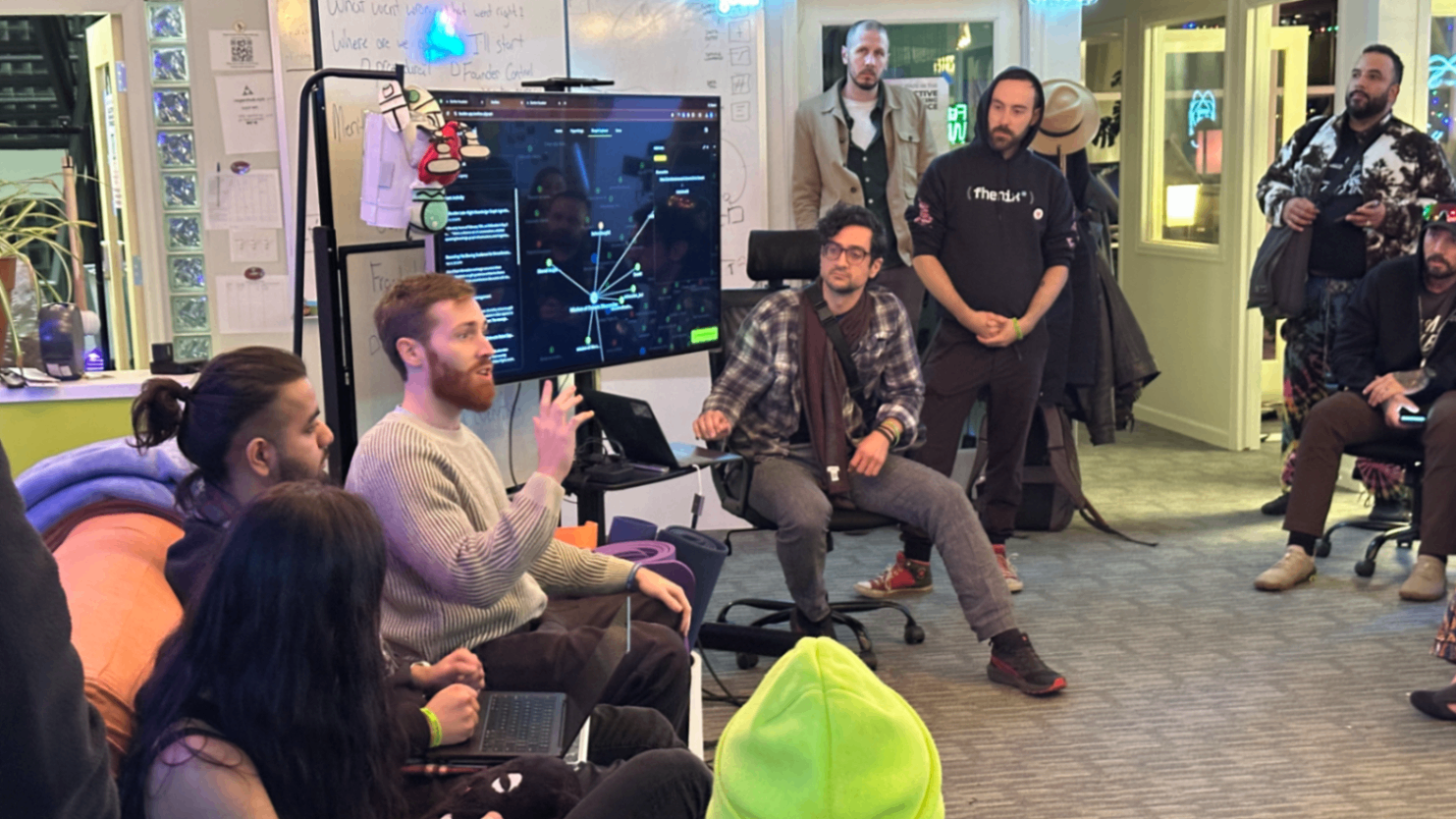
If you happened to be at EthBoulder, a new Ethereum-focused conference, you could just ask an AI bot that served as the secretary and librarian for pretty much everything that took place.
A team from bonfires.ai deployed their "knowledge coordination platform" for the three-day conference, allowing attendees to interact with a Telegram-based bot called "Boulder Bonfire" connected to a searchable data repository.
The vault was pre-loaded with information about the event, and participants could upload audio recordings of sessions, post snippets of conversations and submit photos.
Then they could query Boulder Bonfire questions about all the collected data – either in the main channel, or in direct messages with the bot.
One person asked which track generated the most chatter, and another just wanted to confirm where the happy hour was going down.
Here's my own little Q&A with Boulder Bonfire:
Q: What is EthBoulder?
A: EthBoulder (Feb 13–15, 2026) is a decentralized, community-governed "un-conference" and hackathon held in Boulder, Colorado. It serves as a high-signal gathering for the Ethereum ecosystem, specifically focusing on Ethereum Localism—the application of decentralized protocols to real-world civic and bioregional infrastructure.
Q: How is it different from ETHDenver?
A: EthBoulder and ETHDenver 2026 serve as complementary but distinct experiences within the ecosystem. While ETHDenver is the massive, global "innovation festival," EthBoulder is an intimate, participant-driven "un-conference" designed as a counter-narrative to mainstream crypto.
Key Differences:
• Format: EthBoulder uses a decentralized un-conference model where attendees use quadratic voting to set the daily agenda. ETHDenver uses a structured Summit-style format with pre-defined tracks (DeFi, Security, Policy, etc.) across massive venues like the National Western Complex.
• Philosophy: EthBoulder prioritizes bioregionalism and "epistemic infrastructure," aiming to solve local coordination problems (e.g., the Regen Hub LCA). ETHDenver focuses on the global agentic economy, regulatory pivots ("Project Crypto"), and scaling Ethereum for mainstream adoption.
• Scale & Vibe: EthBoulder is intentionally small and "high-signal," emphasizing community mutual aid and "hippies with laptops." ETHDenver is a massive gathering of 8,000–10,000+ people, functioning as the primary commercial and social hub for the global Ethereum community.
• Governance: EthBoulder is governed by its participants in real-time via the Schelling Point app. ETHDenver is governed by SporkDAO, utilizing a representative model with $SPORK token voting.
Q: Why should I care?
A: Key Reasons to Care:
• Institutional Localism: You can see how crypto actually touches the ground through projects like Doulder (municipal bonds/community currencies) and the Regen Hub LCA, a legal cooperative structure in Colorado for compute-backed service credits.
• Epistemic Health: The event uses the Boulder Bonfire knowledge graph to transform "unconference chaos" into a structured, queryable memory bank. It’s an experiment in collective intelligence rather than just networking.
• Participant Governance: The agenda isn't set by sponsors; it’s determined in real-time by attendees using quadratic voting via the Schelling Point app, ensuring the most relevant technical and philosophical tensions are addressed.
• Agentic AI: It is a major hub for the AI-Crypto intersection, featuring frameworks like ElizaOS and EIP-8004 to build autonomous treasury management and decentralized coordination tools.
• Public Goods: With deep involvement from Gitcoin 3.0 and Open Civics, it’s the place to explore modular funding, "defensive acceleration" (d/acc), and privacy engineering (ZK/FHE) for data sovereignty.
In short, if you are tired of speculative hype and want to see how Ethereum can solve coordination problems for actual human communities, EthBoulder is where that R&D happens.
Q: How many unique humans contributed to the EthBoulder knowledge graph, and how many unique data sources were there?
A: Contributor & Source Breakdown:
• Unique Humans: Over 150 participants contributed to the graph. This includes attendees who submitted session notes, reflections, and audio transcripts, as well as speakers whose talks were synthesized into the 7D framework.
• Data Source Categories:
1. Direct Community Contributions: Real-time inputs from the Telegram chat and the commons.id/app.
2. Social Signals: Scraped and manually indexed discourse from social media (primarily Twitter/X) related to event milestones.
3. Multimedia Processing: Automated NLP processing of audio recordings, voice messages (via Incented), and presentation slides.
The system uses HNSW indexing and the e/H-LAM/T/S framework to transform this "unconference chaos" into a structured, queryable memory bank.
Q: What was the funniest comment that anyone made at EthBoulder or in the various communications with Boulder Bonfire?
A: Top Humorous Highlights:
• The OpenClaw "M&A": During the ClawTalk session at Regen Hub, a participant (UnforcedAG) jokingly announced that OpenClaw was joining OpenAI. This triggered an immediate, mock-serious community pivot to alternative frameworks like TinyClaw and NanoClaw.
• Pizza Diplomacy: A high-signal tweet from @deeparocks that made it into the graph was a casual observation about New York pizza enthusiasts arguing over their favorite local Boulder pizza spot at 7:52 PM on the final night.
• "Do Gooders Paradise": The event was repeatedly characterized in chat logs as a "do gooders paradise," often accompanied by photos of "hippies with laptops" attempting to solve global coordination problems while navigating Boulder's bouldering gyms and sunrise photography spots.
• The "Night Time" Vibe: One of the most retrieved social signals in the graph was a late-night post simply stating, "i come alive in the night time 🎶," which became a recurring theme for the teams grinding through the final hackathon deadline.